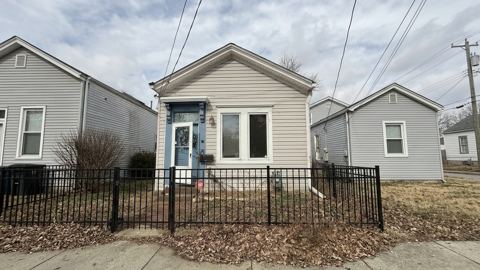

If you're a landlord ready to exit, you can sell a house with tenants in Kentucky without waiting for the lease to end — but how you handle notice, showings, and the security deposit determines whether it's a smooth transaction or a legal headache. This guide covers selling subject to an existing lease versus a month-to-month arrangement, Kentucky's URLTA notice rules, and why a cash sale is often the cleanest way to exit an occupied rental.
Selling subject to a lease vs. month-to-month
A fixed-term lease generally survives a change in ownership — Kentucky law treats the sale of a rental property as not automatically terminating a valid lease. That means if your tenant has eight months left on a one-year lease, a buyer typically takes the property subject to that lease and steps into your shoes as landlord. A month-to-month tenancy is more flexible: it can usually be ended with proper written notice, which gives you more options for delivering the property vacant if a buyer prefers that.
Cash buyers who purchase rentals as investments are often perfectly happy to take over an existing lease and keep the rent coming in, which can make selling with a tenant in place far simpler than trying to convince a retail buyer's lender to accept an occupied property.
Kentucky's URLTA and which jurisdictions adopted it
Kentucky adopted a version of the Uniform Residential Landlord and Tenant Act (URLTA), but it isn't automatically statewide — only jurisdictions that have formally adopted it are governed by its provisions, with local ordinances filling in for others. Louisville/Jefferson County has adopted URLTA, which means landlords and tenants there operate under its notice periods, security deposit handling rules, and habitability standards. If your rental is in a county that hasn't adopted URLTA, different common-law and statutory landlord-tenant rules apply instead. Because these rules vary and change, consult an attorney to confirm which framework governs your specific property before you act.
Right of entry for showings
Even under URLTA, a landlord can't simply show up with a lockbox and let buyers wander through whenever they like. Kentucky's adopted URLTA framework generally requires:
- Reasonable advance notice before entering the unit, typically given in writing.
- Entry at reasonable times, not late at night or without coordination.
- A legitimate purpose for entry, which showing the property to a prospective buyer qualifies as.
- Respecting the tenant's right to be present, or to request rescheduling within reason.
Tenants are often (understandably) unhappy about strangers touring their home while they're still living there, which is one of the biggest practical headaches of listing an occupied rental traditionally.
Security deposit transfer at closing
When you sell a rental with a tenant in place, the tenant's security deposit doesn't disappear — it needs to be accounted for at closing. Typically, the seller transfers the deposit (or a credit equal to it) to the buyer, who then assumes responsibility for returning it to the tenant at move-out under the lease terms. This should be spelled out clearly in the purchase agreement and closing statement, and both parties should notify the tenant in writing of the change in landlord and where the deposit now sits. Skipping this step is a common source of post-closing disputes.
Cash-for-keys as an alternative
If you'd rather sell the house vacant — either because a buyer wants it that way or because the tenant relationship has become difficult — cash-for-keys is a common tool. You offer the tenant a lump sum payment in exchange for vacating by an agreed date and leaving the property in reasonable condition, avoiding a formal eviction process that can take weeks or months and damage the property along the way. It's not guaranteed to work, but it's often faster and cheaper than litigation, especially if you're on a timeline to close.
"Our tenant had four months left on the lease and wasn't thrilled about showings. We ended up selling to a cash buyer who was fine taking over the lease as-is — no cash-for-keys needed, no lost rent, no strangers walking through the living room every weekend." — a typical scenario for landlords exiting occupied rentals in the Louisville area
Why a cash buyer is often the cleanest exit
Traditional retail buyers using a mortgage often can't or won't purchase a property with a tenant in place, since many loan programs require owner-occupancy or vacant possession at closing. That eliminates a large chunk of the buyer pool right away and can force landlords into cash-for-keys or eviction just to make the house sellable. A direct cash buyer, by contrast, can typically:
- Purchase the property with the tenant and lease intact, if that works for both sides.
- Close in as little as 7-10 days once terms are agreed, without appraisal or financing contingencies.
- Handle the property as-is, so you're not investing in repairs or turnover costs before selling.
To understand the full process from offer to closing, see how it works, or read about how our cash offers are calculated. It's worth being upfront that a cash offer will be lower than top retail price for a vacant, freshly updated home — you're trading some equity for speed, certainty, and not having to manage tenant logistics yourself. If your rental sits in Oldham, Bullitt, Shelby, or Nelson County, or anywhere in Louisville Metro, we serve those service areas directly.
Talk to us about your occupied rental
Whether your tenant has a year left on their lease or you're dealing with a difficult month-to-month situation, we can make a fair cash offer that accounts for the property as it sits today. Call the Your Local Home Buyer Team at (502) 660-8782 to discuss your options with zero obligation.
Want a real number on your house?
Your Local Home Buyer, LLC buys houses as-is across Louisville and Southern Indiana. Get a no-obligation cash offer within 24 hours.